
By Henry Harington
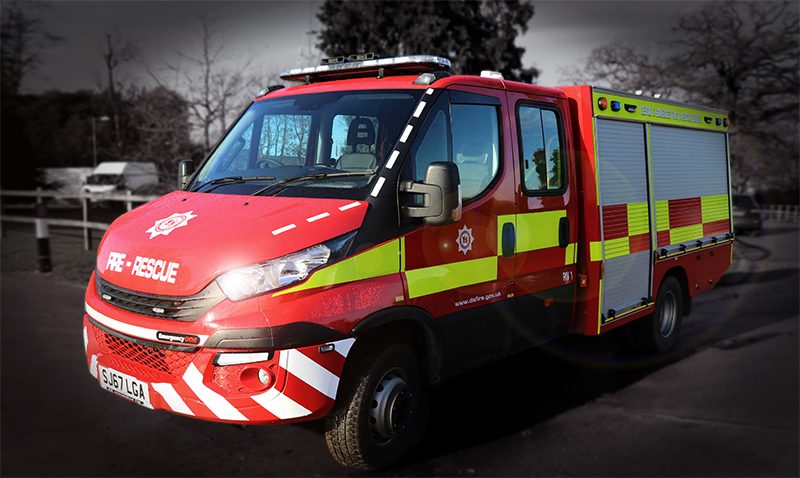
Is it a question of when does cost cutting go too far? The question of safety has been raised by the decision of the Devon and Somerset Fire and Rescue Service to replace the fire engines we know and love with little run around fire engines called Rapid Intervention Vehicles.
The claim is that the smaller engines are more suitable to rural settings, but questions have been raised about whether they can do the same job as the larger models.
Tony Morris, a firefighter of 32 years’ experience, is unconvinced by the changes claiming they are for cost cutting reasons, not improved efficiency (http://stopfirecutsdevonandsomerset.blogspot.com)
He says the smaller tenders have fewer crew, less water and equipment and risk more loss of life and property damage. The reduced capability comprises 50% less water, 50% less hose reel, no rescue ladder, no foam, no portable pump and other reduced equipment.
His major concern is that the lack of a rescue ladder will expose those in taller buildings (over a single story) to greater risk.
The other side of the story are claims that the smaller vehicles are faster, more manoeuvrable in country lanes and that 70% of incidents can could have been dealt with by a crew of only two fire fighters.
Such is the concern of Porlock Parish Council that their chairman, Malcolm McCoy, has written to the Chief Fire Officer expressing alarm at the loss of the larger vehicles in particular as the lower capacity of the RIV is more suited to urban than rural environments because of the greater availability of fire hydrants in towns.
Mr. McCoy has also raised the issue of the willingness of retained fire crew to work with a tender that is little more than a “Mercedes Sprinter” that could lead to a loss of morale and recruitment.
In addition to questions about the capability of the RIV to attend and deal with fires in tall buildings there is a concern that they may not be equipped for what has become a major threat in rural areas. The tinder dry summer and wild fires that devastated parts of the moors in Lancashire this year required all the firefighting capacity that was available, including the use of aircraft. The lower water capacity of the RIV might be a major obstacle to tackling fires on Exmoor and bringing them under control before they spread.
If you wish to make your views known you can write to the chairman of the Devon and Somerset Fire and Rescue Service Councillor Sara Randall-Johnson: sara.randalljohnson@devon.gov.uk
Fire photo by Matt Howard on Unsplash
Leave A Comment